


Medical Centre
Diagnostic
Brzozów 18 Ks. J. Bielawskiego Street


About the facility
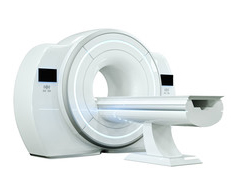
The Voxel Department of Nuclear Medicine in Brzozów is located on the premises of the Specialist Hospital in Brzozów (Building L). It is the first and only centre providing highly specialised diagnostic imaging in the Podkarpackie Voivodeship. Positron emission tomography-computed tomography (PET-CT) scans and nuclear medicine scans (SPECT) are most commonly used in the diagnosis of cancer, enabling treatment planning and monitoring of treatment outcomes.

Short waiting times for patients covered by the National Health Fund (NFZ) contract.

An experienced and specialised team of doctors, technicians and nurses.

Friendly and competent administrative staff.

Free car park
What tests do we carry out?
PET-CT scans
- PET using the radiopharmaceutical FDG
- PET using the radiopharmaceutical CHOLINE
- oncological choline (18F-FDG)
- choline, hyperparathyroidism
- PET-CT inflammatory processes (18F-FDG)
- Cardiac PET-CT
POSITRON EMISSION TOMOGRAPHY (PET), combined with computed tomography (CT), is one of the most effective methods of diagnostic imaging, used primarily in oncological conditions, as well as in selected cardiological and neurological conditions. This innovative method enables oncologists to precisely determine the stage of cancer, locate the primary site of certain tumours and assess whether the disease has recurred, or the extent of any recurrence. PET-guided examinations facilitate the assessment of treatment efficacy, for example in chemotherapy or radiotherapy, and allow doctors to identify minor changes or consider adjusting the treatment regimen; in certain cases of cancer, they also enable a definitive diagnosis to be made, which was previously difficult to achieve using other imaging techniques.
SPECT scans
- bone scintigraphy
- thyroid scintigraphy
- dynamic renal scintigraphy
- scintigraphy using labelled leukocytes
- somatostatin receptor scintigraphy
Scintigraphy (isotope scanning) is an imaging diagnostic method used in nuclear medicine, which involves administering pharmaceuticals labelled with radioactive isotopes into the body, followed by the digital recording of their decay (‘scanning’) and the graphical representation of the isotope’s distribution. The most commonly used radioisotopes are technetium-99m (⁹⁹mTc) and iodine-131 (¹³¹I).
Scintigraphy is used to assess the size, shape and location, as well as the function, of a specific organ.
The main isotope used in diagnostics is technetium (⁹⁹mTc) in combination with various pharmaceuticals, depending on the organ and function to be assessed. The half-life (i.e. the time after which the isotope’s activity is reduced by half) for technetium is short, at 6 hours. The dose of radiation absorbed is low and less than that received during a CT scan. No contrast agent is used, which virtually rules out the possibility of an allergic reaction and any adverse effect on the kidneys. The examinations are safe.
Pregnancy is a contraindication for the test.
Scintigraphy is used to assess the size, shape and location, as well as the function, of a specific organ.
Do we carry out tests on children?
PET-CT – yes, from 0 to 18 years of age,
SPECT – yes, from 0 to 18 years of age.
Notes:
For the scan to be carried out, the child must be able to lie still and remain motionless for the entire duration of the procedure. The scan is performed without general anaesthesia – this type of anaesthesia may only be administered by an anaesthesia team. The decision to administer a contrast agent is made by the radiologist on a case-by-case basis.
Teams
MEDICAL MANAGER
ADMINISTRATIVE MANAGER
Wioleta Kipisz
How to get there
By car
Access from 3 Maja Street or Piastowa Street (exit from the ring road).
By bus
The bus stop is on 3 Maja Street (about 500 metres from the hospital)
Available medical services
- PET-CT (Positron Emission Tomography)
- SPECT (Nuclear medicine scans)
- Isotope therapy
Facility contact details
Registration:
Opening hours:
- Monday: 7:30-21:00
- Tuesday: 7:30-21:00
- Wednesday: 7:30-21:00
- Thursday: 7:30-15:30
- Friday: 7:30-21:00
- Saturday: Closed
- Sunday: Closed
News
Take care of your lungs—take advantage of the free lung cancer screening program!
Ladies and Gentlemen, we are pleased to announce that the VOXEL Group has joined a nationwide lung cancer prevention program funded by the National Health Fund (NFZ).
Short waiting times for PSMA PET-CT and DOTA PET-CT scans in Kraków
The VOXEL Department of Nuclear Medicine announces that short waiting times are available for specialist PET-CT scans using the gallium-68 (Ga-68) tracer.
Planned changes for cancer patients
The Ministry of Health plans to introduce changes designed to improve access to diagnostic imaging for cancer patients.
Announcement from VOXEL S.A.
The merger of VOXEL S.A. with its subsidiaries PRO-SCAN sp. z o.o. and SUPRAMED KONIN sp. z o.o.