Isotope synovectomy is a widely recognised method of treating synovitis of the joints.
In a healthy person, the synovial membrane lines the inside of the joint and produces synovial fluid. When inflammation occurs, the synovial membrane becomes swollen, thickened and increasingly well-perfused, and there is an overproduction of synovial fluid, which causes pain and restricted mobility.
Radioactive isotopes (Yttrium-90, Erbium-169, Rhenium-186) emit high-energy beta radiation, but its penetration depth in tissues is limited to a few millimetres. As a result, it acts almost exclusively within the joint. Exposure of other tissues and the body as a whole is therefore minimal. Beta radiation also has only a negligible effect on the patient’s surroundings.
Radiosynovectomy
Eligibility for treatment
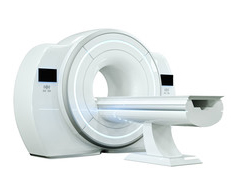
Eligibility for isotope therapy is assessed by a specialist in nuclear medicine on the basis of a referral from a GP, an orthopaedic surgeon, a rheumatologist or another specialist. At our centre, all therapeutic procedures involving intra-articular administration of an isotope are carried out with precision under the guidance of state-of-the-art imaging techniques (ultrasound and CT), ensuring that the procedure is minimally invasive and enhancing the effectiveness of treatment. The procedures are performed by specialists in both nuclear medicine and radiology and diagnostic imaging.
Indications and contraindications
Indications for treatment
Rheumatoid or psoriatic arthritis
Exudative arthritis associated with degenerative changes
Joint inflammation of another aetiology
Synovial hyperplasia
Synovial hyperplasia following joint replacement
Joint inflammation associated with haemophilia
Contraindications to treatment
Absolute contraindications
pregnancy and breastfeeding
Relative contraindications
localised skin infection
ruptured popliteal cyst
significant joint instability
significant loss of articular cartilage
Risks
Possible complications of treatment
Isotope therapy is generally well tolerated; the risk of complications is very low, similar to that following other intra-articular injections.
Effectiveness
Treatment efficacy
The effects of the treatment can be expected to become apparent around 2–4 weeks after treatment.
Where clinically indicated, isotope therapy may be repeated; it is also possible to administer the isotope to another affected joint.
Please note! If you experience any worrying symptoms, you should consult your treating doctor or the doctor who referred you.
Procedure
Booking an appointment
Radiosynovectomy is a procedure reimbursed by the National Health Fund (NFZ) under separately contracted procedures – the referring healthcare facility does not contribute to the cost of the procedure in any way.
In order for a patient to be assessed and for the procedure to be carried out under the National Health Fund (NFZ) scheme, a referral must be correctly issued by a general practitioner or a specialist and must meet the following conditions:
the facility has a contract with the National Health Fund (NFZ) to provide healthcare services
The referral has been issued to the nuclear medicine department
The referral has been issued to the nuclear medicine department
Objective: to qualify for isotope therapy
Following a positive assessment at the nuclear medicine clinic, the patient is referred for isotope therapy, which is provided free of charge under a contract with the National Health Fund
We are one of the very few centres to offer isotope therapy for large, medium and small joints alike.
To book an appointment, please send your referral to the following email address:
Guidance for patients selected to receive a therapeutic doseY90
This procedure involves the precise injection of the ITR Y90 radioisotope into the inflamed joint. At the same time, the doctor administers a steroid to reduce the inflammatory response and enhance the effectiveness of the treatment.
Once the radioisotope has been administered, it will remain in your body for some time as a treatment. Ionising radiation has virtually no effect outside the treated joint, so there is no need to isolate yourself from family members or other people.
Women who are breastfeeding should inform the nuclear medicine specialist of this, and they will then be given guidance on temporarily stopping breastfeeding.
Preparing for Y90 yttrium therapy
The patient attends the Department of Nuclear Medicine at a pre-arranged time
You should bring comfortable, loose-fitting clothes with you.
If you are undergoing treatment for a joint in your lower limb, you should bring underarm or elbow crutches with you, and, if necessary, a brace to immobilise the joint following the procedure.
If you have undergone arthroscopy, you must allow a break of at least 6 weeks.
If you have had a joint aspiration carried out on a joint eligible for treatment, you must wait at least two weeks before the next procedure.
Post-procedure care following the administration of Y90 into a joint
After receiving a therapeutic dose of the Y90 radioisotope, the patient returns home accompanied by a carer.
The joint that has undergone the procedure should be kept immobile for at least 48 hours from the end of the procedure. When treating a joint in the lower limb, you MUST NOT under any circumstances put weight on the affected limb, bend it, squat, etc. For the following week, you should avoid putting excessive strain on the joint or limb, including physical exertion and walking.
Any rehabilitation or physiotherapy treatments may be carried out no earlier than 1 month after the procedure.
You should avoid close/direct contact with young children and pregnant women for around 7 days
During the first month following treatment, you may experience a temporary worsening of symptoms – pain, swelling and increased effusion. If symptoms are severe, we recommend that you continue to rest the joint and apply cold compresses.
The effects of treatment are not immediate – it can take anywhere from a few weeks to a few months for symptoms to disappear or ease.
As the radioisotope remains active for several weeks, attempts to conceive should not be made until at least 4 months after treatment; until then, effective contraception must be used.
Possible complications following the administration of a radioisotope
Radiosynovectomy is a minimally invasive method of treating synovial hyperplasia that occurs in the course of chronic arthritis; it is a safe and well-tolerated procedure, but like any surgical procedure, it carries a risk of adverse effects and complications such as:
a temporary worsening of symptoms in the treated joint (which usually resolves spontaneously),
mild radiation-induced skin changes in the area of the injection site,
intra-articular haemorrhage,
adhesions and fibrosis in the soft tissues surrounding the joint,
bacterial infection of a joint,
reakcja alergiczna,
deep vein thrombosis associated with immobilisation,
leakage of a radioisotope outside the joint cavity, ulcers and necrosis of the skin and subcutaneous tissue (this occurs rarely and is most often due to failure to follow recommendations regarding weight-bearing and joint immobilisation).
Further inspection
Following treatment with a radioactive isotope, follow-up appointments at the Department of Nuclear Medicine are required every few weeks or months, as advised by your doctor.
If necessary, the treatment may be repeated; it is also possible to administer the isotope to another joint affected by the condition.
Guidance for patients selected to receive a therapeutic dose ofRe186
This procedure involves the precise injection of a radioisotope into the joint where inflammation is present Re186. At the same time, the doctor may prescribe a steroid to reduce the inflammatory response and enhance the effectiveness of the treatment.
Once the radioisotope has been administered, it will remain in your body for some time as a therapeutic agent. Ionising radiation has virtually no effect outside the treated joint, so there is no need to isolate yourself from family members or other people.
Women who are breastfeeding should inform the nuclear medicine specialist of this, and they will then be given guidance on temporarily stopping breastfeeding.
Preparing for treatment with RenemRe186
The patient should attend the Department of Nuclear Medicine at the pre-arranged time. Please bring comfortable, loose-fitting clothing with you.
Należy zabrać ze sobą wygodne, luźne ubranie.
If you are undergoing treatment for a joint in your lower limb, you should bring underarm or elbow crutches with you, and, if necessary, a brace to immobilise the joint following the procedure.
If you have undergone arthroscopy, you must allow a break of at least 6 weeks.
If you have had a joint aspiration carried out on a joint eligible for treatment, you must wait at least two weeks before the next procedure.
Management following the administration of Re186 into a joint
After receiving a therapeutic dose of the Re-186 radioisotope, the patient returns home accompanied by a carer.
The joint that has undergone the procedure should be kept immobile for at least 48 hours from the end of the procedure. When treating a joint in the lower limb, you MUST NOT under any circumstances put weight on the affected limb, bend it, squat, etc. For the following week, you should avoid putting excessive strain on the joint or limb, including physical exertion and walking.
Any rehabilitation or physiotherapy treatments may be carried out no earlier than 1 month after the procedure.
You should avoid close/direct contact with young children and pregnant women for around 7 days
During the first month following treatment, you may experience a temporary worsening of symptoms – pain, swelling and increased effusion. If symptoms are severe, we recommend that you continue to rest the joint and apply cold compresses.
The effects of treatment are not immediate – it can take anywhere from a few weeks to a few months for symptoms to disappear or ease.
As the radioisotope remains active for several weeks, attempts to conceive should not be made until at least 4 months after treatment; until then, effective contraception must be used.
Possible complications following the administration of a radioisotope
Radiosynovectomy is a minimally invasive method of treating synovial hyperplasia that occurs in the course of chronic arthritis; it is a safe and well-tolerated procedure, but like any surgical procedure, it carries a risk of adverse effects and complications such as:
a temporary worsening of symptoms in the treated joint (which usually resolves spontaneously),
mild radiation-induced skin changes in the area of the injection site,
intra-articular haemorrhage,
adhesions and fibrosis in the soft tissues surrounding the joint,
bacterial infection of a joint,
allergic reaction,
deep vein thrombosis associated with immobilisation,
leakage of a radioisotope outside the joint cavity, ulcers and necrosis of the skin and subcutaneous tissue (this occurs rarely and is most often due to failure to follow recommendations regarding weight-bearing and joint immobilisation).
Further inspection
Following treatment with a radioactive isotope, follow-up appointments at the Department of Nuclear Medicine are required every few weeks or months, as advised by your doctor.
If necessary, the treatment may be repeated; it is also possible to administer the isotope to another joint affected by the condition.
Guidance for patients selected to receive a therapeutic dose of Er169
This procedure involves the precise injection of a radioisotope into the inflamed joint Er169. At the same time, the doctor may prescribe a steroid to reduce the inflammatory response and enhance the effectiveness of the treatment.
Once the radioisotope has been administered, it will remain in your body for some time as a treatment. Ionising radiation has virtually no effect outside the treated joint, so there is no need to isolate yourself from family members or other people.
a specialist in nuclear medicine, from whom you will receive guidance on temporarily stopping breastfeeding.
Preparing for treatment with ErbEr169
The patient attends the Department of Nuclear Medicine at a pre-arranged time
You should bring comfortable, loose-fitting clothes with you.
If you are undergoing treatment for a joint in your lower limb, you should bring underarm or elbow crutches with you, and, if necessary, a brace to immobilise the joint following the procedure.
If you have undergone arthroscopy, you must allow a break of at least 6 weeks.
If you have had a joint aspiration carried out on a joint eligible for treatment, you must wait at least two weeks before the next procedure.
Post-procedure care following the injection of Er169 into the joint
Following administration of a therapeutic dose of a radioisotope Er169 the patient goes home accompanied by a companion.
The joint that has undergone the procedure should be kept immobile for at least 48 hours from the end of the procedure. When treating a joint in the lower limb, you MUST NOT under any circumstances put weight on the affected limb, bend it, squat, etc. For the following week, you should avoid putting excessive strain on the joint or limb, including physical exertion and walking.
Any rehabilitation or physiotherapy treatments may be carried out no earlier than 1 month after the procedure.
You should avoid close/direct contact with young children and pregnant women for around 7 days
During the first month following treatment, you may experience a temporary worsening of symptoms – pain, swelling and increased effusion. If symptoms are severe, we recommend that you continue to rest the joint and apply cold compresses.
The effects of treatment are not immediate – it can take anywhere from a few weeks to a few months for symptoms to disappear or ease.
As the radioisotope remains active for several weeks, attempts to conceive should not be made until at least 4 months after treatment; until then, effective contraception must be used.
Possible complications following the administration of a radioisotope
Radiosynovectomy is a minimally invasive method of treating synovial hyperplasia that occurs in the course of chronic arthritis; it is a safe and well-tolerated procedure, but like any surgical procedure, it carries a risk of adverse effects and complications such as:
a temporary worsening of symptoms in the treated joint (which usually resolves spontaneously),
mild radiation-induced skin changes in the area of the injection site,
intra-articular haemorrhage,
adhesions and fibrosis in the soft tissues surrounding the joint,
bacterial infection of a joint,
allergic reaction,
deep vein thrombosis associated with immobilisation,
leakage of a radioisotope outside the joint cavity, ulcers and necrosis of the skin and subcutaneous tissue (this occurs rarely and is most often due to failure to follow recommendations regarding weight-bearing and joint immobilisation).
Further inspection
Following treatment with a radioactive isotope, follow-up appointments at the Department of Nuclear Medicine are required every few weeks or months, as advised by your doctor.
If necessary, the treatment may be repeated; it is also possible to administer the isotope to another joint affected by the condition.
Używamy plików cookie na naszej stronie internetowej, aby zapewnić Ci bezpieczeństwo dzięki zapamiętywaniu Twoich preferencji i powtarzaniu wizyt. Klikając „Akceptuję”, wyrażasz zgodę na użycie WSZYSTKICH plików cookie. Szczegóły znajdziesz w naszej polityce prywatności.
This website uses cookies to improve your experience while you navigate through the website. Out of these, the cookies that are categorized as necessary are stored on your browser as they are essential for the working of basic functionalities of the website. We also use third-party cookies that help us analyze and understand how you use this website. These cookies will be stored in your browser only with your consent. You also have the option to opt-out of these cookies. But opting out of some of these cookies may affect your browsing experience.