


- Select a test
Patient Guide
Find out how to prepare for your scan, what diagnostic equipment we use, and get answers to any questions you may have.
Find out how to prepare for your scan, what diagnostic equipment we use, and get answers to any questions you may have.
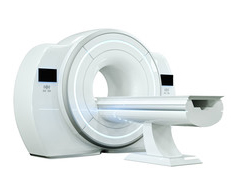
Positron Emission Tomography (PET), combined with computed tomography (CT), is one of the most effective methods of diagnostic imaging, used primarily in oncology, as well as in certain cardiac and neurological conditions.
This innovative method enables the precise determination of the location and stage of cancer, the identification of the primary tumour, and the assessment of any recurrence of the disease. PET-guided treatment facilitates the assessment of the effectiveness of radiotherapy or chemotherapy. In the case of certain cancers, it enables a definitive diagnosis to be made, which can sometimes be difficult using other imaging techniques. In addition, PET-CT scans are used in the diagnosis of inflammatory conditions: inflammatory bowel disease and vasculitis.
Outside the field of oncology, PET is mainly used for brain scans, including the diagnosis of neurodegenerative disorders such as Alzheimer’s and Parkinson’s diseases, as well as various forms of schizophrenia and epilepsy. PET also enables the early diagnosis of Huntington’s disease, the monitoring of myocardial metabolism – including the assessment of myocardial viability – as well as cardiovascular conditions and inflammatory conditions of unknown origin.
During the examination, a PET scan of the patient’s body is performed, showing the uptake of the tracer previously administered to the patient, alongside a CT scan, which visualises the body’s anatomical structures. The combination of these two methods – PET and CT – allows for a very accurate assessment of metabolic changes occurring within cells, as well as the identification of lesions and the precise determination of their location.
A PET scan makes use of the fact that certain pathological changes are accompanied by alterations in the metabolism of specific chemical compounds. The patient is given an intravenous injection of a substance known as a radiopharmaceutical; this is most commonly fluorodeoxyglucose labelled with the fluorine-18 isotope (18F-FDG), which has a short half-life, ensuring that the radiation dose is safe.
The metabolism of fluorodeoxyglucose is identical to that of glucose in the body and is elevated in cancer cells, which makes it possible to localise diseased tissues even before subtle structural changes become visible. All Voxel centres use their own supplies of FDG, produced at the Radiopharmaceutical Production Centre in Kraków, which ensures rapid distribution of the preparation within a few hours of its production.

24 hours before your scheduled examination:
You must not eat or chew gum for 6 hours before the scheduled appointment.
You should drink approximately 1–1.5 litres of still, unflavoured, unsweetened mineral water gradually.

You should avoid strenuous physical activity (e.g. sports, heavy physical labour) for at least 24 hours beforehand
If you have a cold, are taking antibiotics or steroid medication, have recently had an infection, are undergoing radiotherapy or chemotherapy, have had surgery, or find yourself in a situation that prevents you from attending your appointment on the scheduled date – please contact the centre where the examination is to be carried out.
On the day of the examination, you should wear comfortable, warm clothing (due to the air conditioning) that is free from metal parts (e.g. underwires, zips, etc.)

Before the test, the patient should inform the medical staff about any medication they are taking and their blood sugar level. If the test is carried out after 12:00, it is recommended that the patient eat a light breakfast and take their usual diabetes medication.

You must not eat anything or take insulin for 4 hours prior to the test (further details will be provided when you book your appointment). You may only drink still, unsweetened water. If you are taking insulin, please contact the centre before the test.

Your blood sugar level will be measured before the test. It is very important that your blood sugar level is stable before the test. Excessively high blood sugar levels can lead to errors in the test results and often make it impossible to carry out the test.
If your blood sugar level is too high (hyperglycaemia), the test may be cancelled or rescheduled for a later date when your blood sugar has returned to normal.
PET-CT scans are mainly used in the diagnosis of cancer, as well as in certain cardiac and neurological conditions.
The test is reimbursed by the National Health Fund (NFZ) in strictly defined cases as set out on the referral form Download the referral form PDF. For other clinical indications, a PET-CT scan may be carried out at the patient’s own expense.
In oncology, the test enables:

Early detection of cancerous lesions

Assessment of the stage of cancer

Precise treatment planning

Treatment monitoring
Early assessment of treatment efficacy

The earliest detection of cancer recurrence

Pregnancy, or the patient being unable to rule out pregnancy

Relative contraindications. Breastfeeding – it is recommended to stop breastfeeding for 12 hours after administration of the radiotracer; the first breastfeed after administration should not be given to the baby (it should be discarded)

The test should not be carried out immediately after or during radiotherapy or chemotherapy, or following endoscopic examinations, operations or biopsies, except in individual cases as recommended by a doctor, or whilst suffering from an infection
or undergoing a course of antibiotics

Glucose level above
200 mg%

No clinical indications for the test

Inadequate preparation of the patient for a PET-CT scan

Remember!
If the examination is to be carried out under the National Health Fund (NFZ), the original referral must be submitted to the clinic 14 days before the scheduled date of the examination. This requirement applies only to paper referrals. It does not apply to e-referrals.
Please note that you can also register for badanie online.
Download: Skierowanie na badanie PET-TK NFZ ( PDF )
Download: Ankieta – Karta wewnętrzna przed badaniem PET-TK ( PDF )
Download: Przygotowania do badania PET/TK ( PDF )
Download: PET z użyciem analogu somatostatyny ( PDF )
Download: Przygotowania do badań kardiologicznego PET/TK FDG ( PDF )
The administration of the isotope is painless and does not cause any noticeable side effects.
Due to the administration of the radiopharmaceutical and the associated radiation, patients should attend the examination unaccompanied, unless their medical condition requires the presence of a companion.
At reception, the patient will be informed of the date on which they can collect their test results, which are sent to our specialists for interpretation and consultation. Results can be collected in person or by another person, provided the relevant authorisation form has been completed. The results consist of a medical report and a disc containing the PET-CT images along with the accompanying description.
The results of the PET-CT scan are not available online.


