The DaTSCAN study
New diagnostic possibilities
PARKINSON'S DISEASE
ALZHEIMER'S DISEASE
New diagnostic possibilities
PARKINSON'S DISEASE
ALZHEIMER'S DISEASE
The DaTSCAN scan is used to detect the loss of nerve cells in an area of the brain known as the striatum, in particular dopamine-releasing cells.
This test is used to diagnose the following conditions in adults (aged 18 and over):
The active substance in DaTSCAN, joflupan (123I), is a radiopharmaceutical. Joflupan binds specifically to structures on the surface of nerve cell terminals in the striatum: it visualises presynaptic dopamine uptake within the structures of the substantia nigra in the midbrain.
Degenerative changes observed, for example, in Parkinson’s disease lead to the destruction of dopaminergic neurons; they cause abnormalities in the accumulation of the tracer in the striatum and basal ganglia.
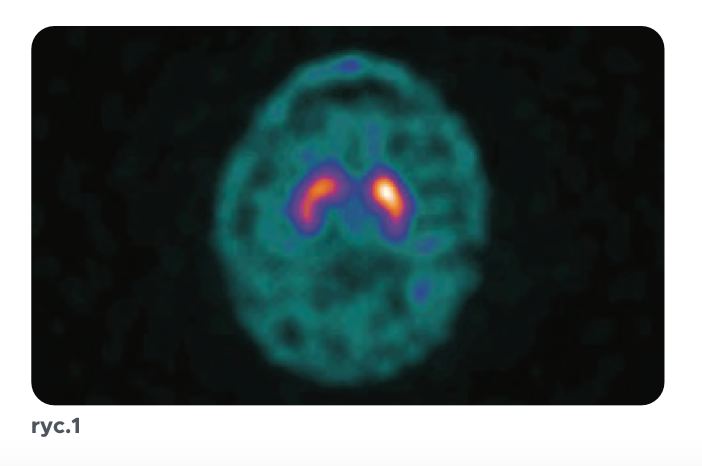
SPECT technology and modern software make it possible to assess functional deficits in dopamine uptake even at an early stage of the disease, whilst quantitative assessment allows for an accurate estimation of the degree of degeneration of the substantia nigra in the brain, as shown in Fig. 1.
In patients with Parkinson’s disease and related disorders, and in patients with dementia characterised by the presence of Lewy bodies, there is a loss of dopamine-containing nerve cells in the striatum. When this occurs, the amount of DaTSCAN binding to these nerve cells is significantly reduced compared with normal levels, as illustrated in Figure 2.
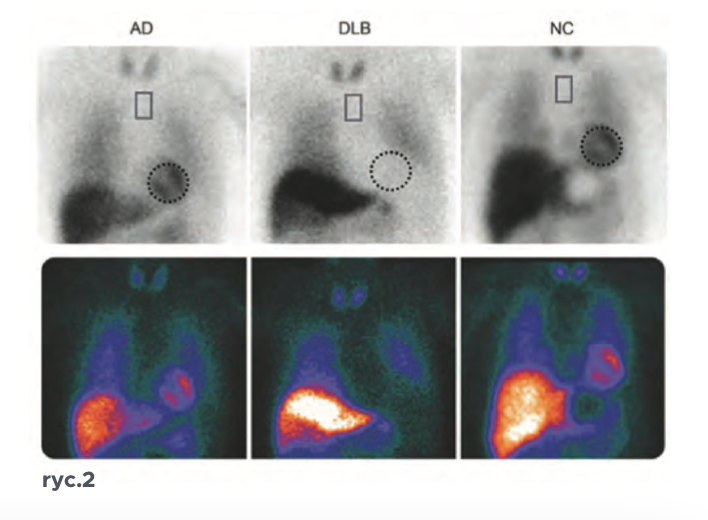
This makes it possible to distinguish Parkinson’s-related disorders from essential tremor, and dementia with Lewy bodies from Alzheimer’s disease.
The most common side effects associated with the use of DaTSCAN (observed in 1 to 10 patients in 100) are: increased appetite, headaches, tingling on or under the skin, and dizziness. The risk associated with radioactivity is considered to be very low.
DaTSCAN must not be administered to patients who may be hypersensitive or allergic to joflupan or any of the product’s ingredients. The product must not be used in pregnant women.
A DaTSCAN scan, which is reimbursed by the National Health Fund (NFZ), may be referred by a specialist neurologist or neurosurgeon with at least five years’ experience in treating patients with parkinsonism.
The referring practice does not bear the cost of the examination – the procedure is funded by the National Health Fund (NFZ) through contracted services.
A referral for the scan may be issued by a specialist clinic or by a ward following the patient’s discharge from hospital. In such cases, the discharge summary or recommendations should include the note ‘a referral for a DATSCAN examination has been issued’, and the referral (in traditional paper form or as an e-referral) should be given to the patient, who should then send it to the following email address to arrange an appointment: pet.katowice@voxel.pl
Neither the ward nor the outpatient clinic referring a patient for a DatSCAN scan bears the cost of the scan under this procedure (funded by the National Health Fund, high-cost outpatient diagnostic services – ASDK)

Please note!
Our MCD Voxel centre in Katowice also offers differential diagnosis for patients with dementia with Lewy bodies and Alzheimer’s disease.
Myocardial scintigraphy using 123I-MIBG allows for the quantitative assessment of the sympathetic innervation of the heart’s ganglionic system. In Lewy body dementia, this innervation is reduced. This test has a sensitivity of 69% and a specificity of 87% in distinguishing probable Lewy body dementia from probable Alzheimer’s disease.
The procedure is reimbursed; a referral may be issued by a specialist in any field of medicine.

To book an appointment, please send your referral to the following email address: